
Social Media Marketing for Law Firms
A firm’s social presence is less a publishing question than an operating one. Which channels earn a place. What the firm can produce month after month. Who reviews it. Who answers when someone replies.
Urban Geko plans, produces, and helps operate social media for law firms. Depending on what an engagement calls for, that can mean setting strategy and channel roles, building the editorial plan, writing and designing the posts, producing the video, publishing and maintaining the accounts, coordinating paid distribution, and reviewing what the platforms report back.
There is no fixed channel list here. The mix follows from what the presence has to support, who the firm needs to reach, what subject matter and people are available, and what the firm can sustain past the first push.
—
The hard part is rarely opening the account
Opening an account is the small part. The harder decisions come after: what each account is actually for, where the material comes from, how it moves through review without stalling, and who answers a comment that arrives on a Friday evening.
A social engagement is partly a content problem and partly an operating problem. Both belong in the same conversation.
Urban Geko can take on either side or both. One engagement might cover strategy and production with the firm’s own team publishing. Another might include scheduling, channel upkeep, and monitoring. The difference is scope, and it is settled for the engagement rather than assumed.
—
Start with what the presence has to support
Objectives vary from firm to firm, and they point in different directions. A presence may need to reach people who have never hired a lawyer and do not know what to ask. It may need to hold visibility with in-house counsel and referral sources. Recruiting may be the reason social comes up at all. A practice group running a seminar series may be working against a calendar more than a brand question.
Each of those implies different audiences, subject matter, register, format, and channel. It is worth settling first, because the channel list is easier to argue about than the objective, and it is the objective that should decide it.
Audiences worth naming before channels
Naming them makes the channel decision arguable rather than aesthetic. Urban Geko works through it with whoever owns marketing at the firm and, where the firm wants it, with the attorneys who will appear in the work.
—
Choosing channels by the job they can do
Platforms differ in what they ask for, who is there, and how much production each format takes. What follows is how they differ in practice, not a ranking.
Facebook is two things at once
The organic page can carry firm updates, events, community involvement, hiring notices, and links to published material. For a firm with a strong local footprint, it can support a straightforward, non-technical voice that might sit oddly on a professional network.
The advertising layer is a separate scope. Meta’s ad system distributes selected creative according to the audience definition and placements chosen, within current policy limits, and it can run whether or not the page publishes often. Page performance and ad performance are different measurements and are worth reading separately.
LinkedIn works on two levels
The firm page can carry firm news, practice-group insight, published writing, event material, recruiting posts, and paid formats such as sponsored content.
Individual attorney participation is a different question. A post, comment, or share from a person reads differently than the same material published by an organization, and a firm has to decide how much individual participation it wants to encourage and support. Urban Geko can produce material for both, including drafts prepared for an attorney to review and shape into their own voice, where a firm wants that kind of support.
Instagram depends on what there is to show
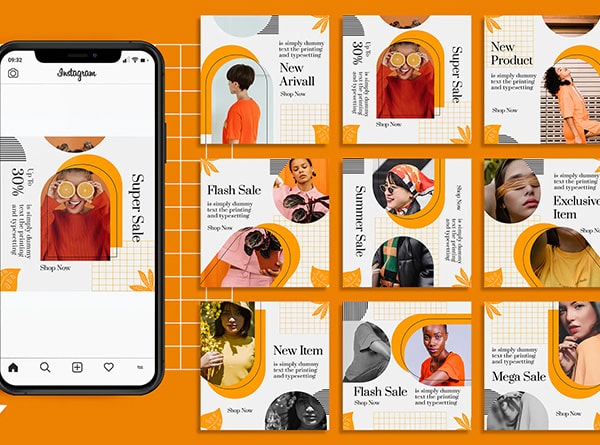
Visual posts, carousels that step through an explanation, stories for lighter or time-bound material, and reels for short video. The channel is worth considering where the firm has real things to photograph and film: teams, offices, community events, pro bono work, speaking engagements, hiring days, milestones.
It also depends on capture. Without photography or video coming in regularly, an Instagram account can end up leaning on quote graphics and stock imagery, which is a thin use of the channel and of the budget behind it. Design carries weight here as well, since a carousel has to be legible on a phone held at arm’s length.
TikTok is a production commitment before it is a channel
Where TikTok is in the mix, it is worth planning as native production rather than as a trim of longer footage. That asks for at least one person comfortable on camera, subject matter that survives a casual register, attention to pacing, sound, and captioning, and the ability to keep producing rather than posting twice and stopping.
Fit is worth deciding honestly. Material suited to TikTok can sit uncomfortably beside a firm’s positioning or its own review standards, and deciding against the channel for that reason is a legitimate outcome of the same analysis. Where it does fit, Urban Geko can handle concepting, capture, editing, and management as part of the engagement.
YouTube can be used in more than one way
One use is a maintained channel: an organized, findable home for the firm’s video, with sensible titles, descriptions, thumbnails, and playlists, serving as a library and an embed source for the website. That has value even without frequent uploads.
Another is Shorts, where vertical clips captured for Instagram or TikTok can be cut for a different audience.
A third is deeper explanatory video: recorded interviews, presentations, process walkthroughs, seminar recordings. More production, and more room for subjects that cannot be handled in sixty seconds.
These are possible modes rather than steps in a sequence. Search visibility, subscribers, and view counts depend on much more than production quality, so what the firm wants YouTube to do is a decision made in the plan rather than an assumption built into it.
Capacity decides how wide the mix can be
The practical constraints are the number of people willing to contribute, how often capture can realistically happen, how many review layers content passes through, and the honest number of formats the firm can keep feeding. Where capacity is the binding constraint, a narrower presence the firm can hold is worth considering before a wider one.
Urban Geko recommends a mix based on those inputs. Channels can be added later when capacity supports them.
—
Turning firm knowledge into material worth publishing
Editorial themes before a calendar
A calendar built without themes can turn into a search for something to post. Themes give it a spine: practice-area explanation, developments the firm already tracks, matters described at an appropriate level, people and culture, community and pro bono, recruiting, events and speaking, and the firm’s own published writing. The topic planning and owned publishing behind several of those themes sits within content marketing for law firms, which is where decisions about what the firm writes and maintains are made.
With themes in place, more of the calendar becomes a scheduling question, and a gap in raw material is easier to see before it arrives.
Sourcing from what already exists
A firm may already have material that has not reached social: client alerts, CLE decks, webinar recordings, podcast appearances, press mentions, award announcements, conference photos, blog posts, and the practice pages on its own site.
Capture sessions can add to that. A single recorded conversation with an attorney can supply more than one post and more than one format.
Writing, design, and video for the formats selected
Copy differs by format, and so does everything around it: hooks, captions, carousel design, motion graphics, subtitling, vertical and horizontal edits, thumbnail design, and brand consistency across all of it.
Urban Geko brings 25 years of digital design and marketing experience to that production. Where writing, design, and video are part of the production scope, they can be handled together inside the same engagement.
—
One subject, several treatments
Say an employment group publishes a client alert on a change to overtime classification. That one subject can support a range of work without becoming the same post pasted five times.
Reusing capture across formats is one way to keep production manageable. Rewriting the framing for each context is a judgment about how the same subject should read in different places.
—
Running the accounts, or handing them back
Where publishing and management are in scope, the work can include scheduling and posting to the agreed rhythm, along with the upkeep that is easy to neglect: profile and about information, pinned content, link destinations, page settings, cover imagery, playlist organization, and account access and roles.
Monitoring is its own arrangement. Where it is included, Urban Geko can watch comments and messages and respond within categories the firm agrees to in advance. Items touching a specific matter, a client, a complaint, or a request for legal guidance can be treated as escalations. Where that line sits is defined for the engagement.
The alternative is a production engagement that ends at delivery, with the firm’s own team publishing and responding. Both are workable. The difference is coverage, response time, and who holds the accounts.
—
Organic publishing and paid distribution are separate decisions
Organic work builds and maintains the presence itself: the channels selected, the content rhythm, and whatever audience follows or finds the accounts.
Paid work uses the advertising systems available through platforms such as Meta, LinkedIn, TikTok, and YouTube to place selected creative in front of a defined audience. It involves a different set of possible tasks. Depending on what is scoped, those can include audience definition, creative built or adapted for ad placements, budget and pacing, destination pages, tracking, and campaign reporting.
Whether paid social belongs in a Social engagement is decided for that engagement. Urban Geko provides paid media, and paid social can be scoped alongside organic work, folded into a broader campaign, or left out entirely. It is not automatically included.
Where the two connect, they connect deliberately: creative developed for organic use and adapted for distribution, a defined push behind an event or a hiring campaign, or a practice-area program running for a set period with its own destinations.
One practical note. Current advertising policies on the platforms under consideration may treat legal services and certain audience categories differently, and those policies are worth checking against the campaign being built. The firm remains responsible for its own advertising, ethics, and professional-conduct obligations. Urban Geko works within the firm’s review process and does not provide legal or regulatory advice.
—
What measurement can and cannot settle
What is available to review depends on the channels in scope and the tracking setup in place. That can include impressions and reach, video retention and average view duration, saves and shares, profile and page visits, follower change, link clicks, and campaign delivery data where ads are running. Website analytics, with campaign tagging in place, can show what arriving visitors did next.
None of that produces a clean line from a post to a signed matter. Content gets shared privately, referrals get mentioned on phone calls, and the gap between seeing something and acting on it can be long. Reading the numbers as though that line exists can support bad calls in both directions, cutting work that is helping and defending work that is not.
What review genuinely supports is better decisions about the next stretch of work: which subjects hold attention, which formats justify their production time, which channels are earning their place, whether the calendar is realistic, and what deserves a test.
Urban Geko does not guarantee reach, engagement, followers, clicks, inquiries, or clients. How much can be measured, and how far it can be interpreted, depends on the scope of the engagement and the setup behind it.
—
What makes one engagement larger than another
Scope on social work moves with a handful of variables:
Engagements can range from a focused project, such as a channel setup with a first content push or a single video series, to ongoing multi-discipline work across the connected law firm marketing disciplines. Services, deliverables, responsibilities, timing, pricing, and terms are defined for the actual engagement once its goals, starting point, and requirements are understood.
—
Where social meets the rest of the firm’s marketing
Social work often leans on something outside the accounts. A post that points to a page which does not carry the subject any further asks a lot of the reader who follows it, and whether practice pages, attorney bios, and landing pages can carry that weight is a law firm web design question. Video shot for social may also belong on practice pages and attorney bios. A recruiting push or an event campaign may call for landing pages, law firm email marketing, and social moving on the same schedule.
Where a dependency like that materially affects the social work, Urban Geko can take it on within the same engagement, and the scope makes clear which parts are included.
—
Frequently asked questions
Which platform is best for law firms?
The right channels depend on who you need to reach, what subject matter you have, which people are willing to contribute or appear, how much production you can support, and what your review process can absorb. A recruiting objective and a local consumer-practice objective point in different directions, and the same firm can reach different answers for different practice groups. The useful version of the question is which channels can do a specific job for your firm and be sustained afterward.
Do our attorneys have to be on camera?
No. Video is one option among several, and carousels, written insight, design-led explanation, and firm-page content do not require anyone on camera. If short-form video is central to the mix you want, someone has to be willing to appear. That is a scoping conversation rather than an assumption.
Do you produce the photography and video, or do we supply it?
Either can work, and so can a combination. Capture can be part of the scope, whether that means recorded interviews, event coverage, or footage shot on location, all of which fall within law firm video production planning and editing. An engagement can also work from photography, recordings, and footage the firm already has. What is captured, where, and how often is one of the larger scope variables in social work.
Can you work with the accounts we already have?
Existing accounts can be brought into an engagement. What happens to them is a scoping question: who currently holds access, whether profile information and destinations are accurate, and whether the existing following matches the audience you want. Reviewing, adjusting, restructuring, or leaving an account as it is are all possible, and where an account is not worth keeping, that is worth saying plainly.
Do we have to run ads for social to be worth doing?
No. Organic publishing and paid distribution are scoped separately. Paid is worth raising when there is a defined audience you need to reach beyond the people already following the accounts, and a specific reason to reach them, such as an event, a hiring campaign, or a geographic push. Where nothing points that way yet, organic work stands on its own.
Who writes the content?
That depends on the engagement. Urban Geko can write and design from source material the firm supplies, draft from recorded interviews with attorneys, or work from existing published writing. How much attorney input a given piece needs affects scope, and review and approval responsibilities are defined for the engagement.
What happens when someone comments something we should not answer?
Response boundaries can be agreed before publishing starts. Routine replies can be handled inside agreed limits, and categories such as a specific matter, a client relationship, a complaint, or a request for legal guidance can be set aside for the firm. Where that line sits is the firm’s decision.
Can we start with one practice group instead of the whole firm?
Yes. A single practice group, a single attorney, or a specific objective such as recruiting is a reasonable place to begin. It can also be a way to work through production and approval logistics at a smaller size before deciding whether to expand.
—
Tell us what you want the presence to do
The most useful opening conversation is about the objective rather than the platforms. What the presence has to support, who the firm wants to reach, and what the firm can carry internally will shape the answer more than any channel list.
If you already know which people are willing to appear, what accounts and content exist, or how approvals work at the firm, that context helps. If you do not, the objective is enough to start with.
Ready When You Are
Talk With Urban Geko About Your Next Project
Get in touch with Urban Geko and describe your situation, including anything you have already tried. From there we can talk about which channels could earn a role, what production would involve, and what scope would suit the firm.